Mental Preparation & Visualization
The brain processes vivid mental imagery using the same neural pathways as physical experience. Mental rehearsal — done correctly — creates real neural conditioning. Surgeons, pianists, and Olympic athletes use it as a core training tool.
The Three-Window Visualization Schedule
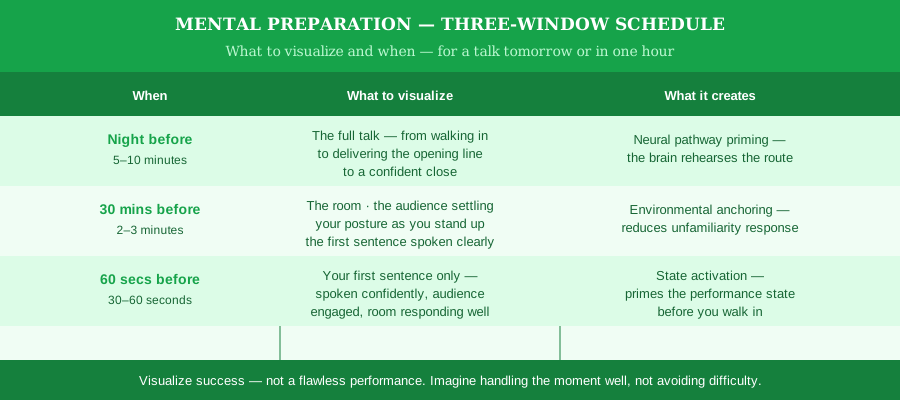
The diagram shows what to visualize and when — across three time windows before any high-stakes speaking situation. Each window serves a different neurological purpose.
Worked Example: Visualization Script for the Opening
Topic: 'Why most professionals will never use AI effectively.' Here is what the 60-second pre-speech visualization looks like in practice.
Third-Person Self-Talk — One Simple Shift
Research shows that third-person self-talk outperforms first-person for reducing performance anxiety. The mechanism is psychological distance: stepping outside the anxious self creates perspective.
- ✓First-person (less effective): 'I can do this. I am ready.' — Keeps you inside the anxiety — arguing with the nervous system from the same position it occupies
- ✓Third-person (more effective): '[Your name], you know this material. You have prepared.' — Creates distance from the anxious self — coaching from outside, not reassuring from inside
- ✓Use your actual name, not 'you' — Research by Ethan Kross at Michigan found that using your own name in self-talk is the most effective formulation
Key Takeaways
- 1Visualization creates real neural conditioning — the brain treats vivid imagery and physical experience identically
- 2Three windows: night before (full run), 30 minutes before (room and opening), 60 seconds before (first sentence only)
- 3Visualize process not outcome — see yourself handling the moment well, not delivering a flawless talk
- 4Third-person self-talk ('Your name, you are ready') outperforms first-person for reducing anxiety
- 5The 60-second window is the most important — prime the performance state right before entry
What's Next
Continue through the course in order, or jump back to review earlier lessons.