Practice Strategies
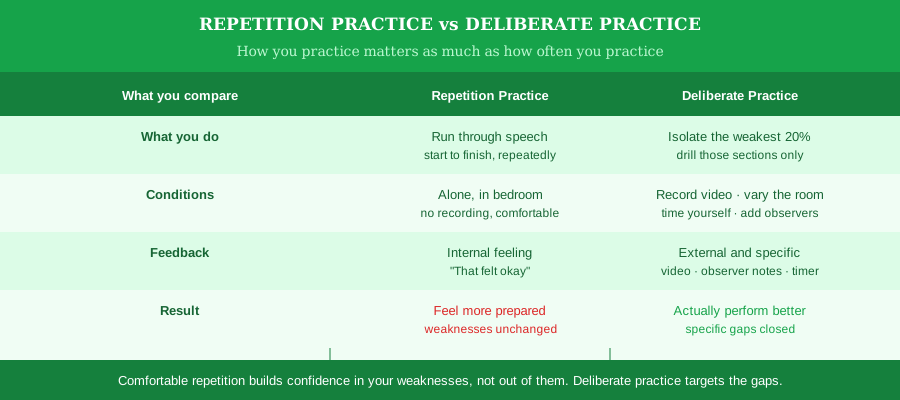
Repeating a speech in your bedroom builds comfort with your weaknesses, not out of them. Deliberate practice means targeting the specific sections you are worst at, under conditions that resemble the real performance.
Deliberate Practice vs Repetition — The Difference That Matters
The diagram shows exactly what separates deliberate practice from simple repetition. Most speakers practice in a way that makes them more comfortable with their current performance — not better than it.
Worked Example: A Deliberate Practice Session
Topic: 'Why most professionals will never use AI effectively.' Here is what a deliberate practice session looks like on a real 20-minute talk.
Four Practice Conditions That Build Real Performance
Deliberate practice requires more than identifying what to fix — it requires practicing under conditions that resemble the real event.
- ✓Record video of yourself — The gap between how you feel and how you look is almost always large — video closes it
- ✓Vary the room — Unfamiliar environments reactivate the anxiety you need to practice through, not around
- ✓Practice with a timer — Pacing is a separate skill from content — most speakers run long only under pressure, not in rehearsal
- ✓Invite one observer — Social pressure is the variable most absent from solo practice — even one person changes the performance
Key Takeaways
- 1Deliberate practice means isolating the weakest 20% of your talk and drilling it under pressure-like conditions
- 2Repetition practice builds comfort with weaknesses, not out of them
- 3Video feedback is the single most useful solo practice tool — the gap between feeling and appearance is always large
- 4Vary the room: unfamiliar environments reactivate the anxiety you need to practice through
- 5Invite at least one observer — social pressure is the variable most absent from solo rehearsal
What's Next
Continue through the course in order, or jump back to review earlier lessons.