Understanding Speaking Anxiety
Up to 75% of people report fear of public speaking. You are not abnormal — you have a nervous system doing exactly what it evolved to do. The goal is not to eliminate the feeling. The goal is to understand it well enough to use it.
Anxiety and Excitement Are the Same Physical State
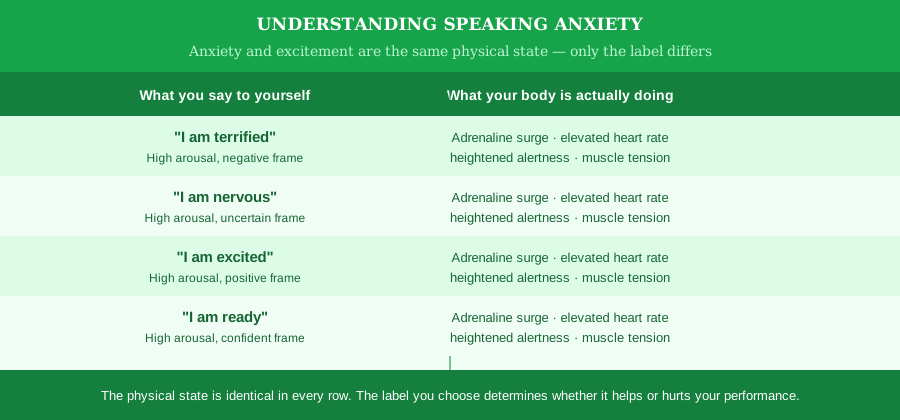
The diagram shows all four rows contain identical physical descriptions. Only the label in the left column changes. Research by Alison Wood Brooks at Harvard confirmed that speakers who reframe pre-speech nervousness as excitement perform measurably better than those who try to calm down.
Worked Example: Reframing Before a High-Stakes Talk
Topic: 'Why most professionals will never use AI effectively.' Here is the difference the reframe makes in the 60 seconds before delivery.
The One Thing Expert Speakers Know
Professional speakers of 20+ years still report pre-speech nervousness. The nervous system never fully stops activating before a high-stakes social performance. The difference is not absence of anxiety.
- ✓Experts are comfortable with the feeling — not free of it — The nervousness is familiar and expected. It does not trigger a secondary panic response on top of the first.
- ✓The physical symptoms are a performance signal, not a warning signal — The same elevated heart rate that feels like threat in a novice feels like readiness in an experienced speaker
- ✓Stop trying to get rid of the butterflies — get them flying in formation — The energy from pre-speech arousal is real and useful. Suppressing it removes the fuel. Directing it improves the performance.
Key Takeaways
- 1Up to 75% of people fear public speaking — the feeling is universal, not a personal weakness
- 2Anxiety and excitement are the same physical state — your label determines the effect on performance
- 3Reframing nervousness as excitement produces measurably better results than trying to calm down
- 4The goal is not to eliminate anxiety — it is to channel it as fuel for the performance
- 5Even expert speakers feel pre-speech nerves. The difference is familiarity with the feeling, not its absence.
What's Next
Continue through the course in order, or jump back to review earlier lessons.