Handling Mistakes Gracefully
Every speaker makes mistakes. The difference between an amateur and a professional is not whether mistakes happen — it is the response time and composure when they do. A graceful recovery can actually increase credibility.
Three Mistakes, Two Responses — Amateur vs Professional
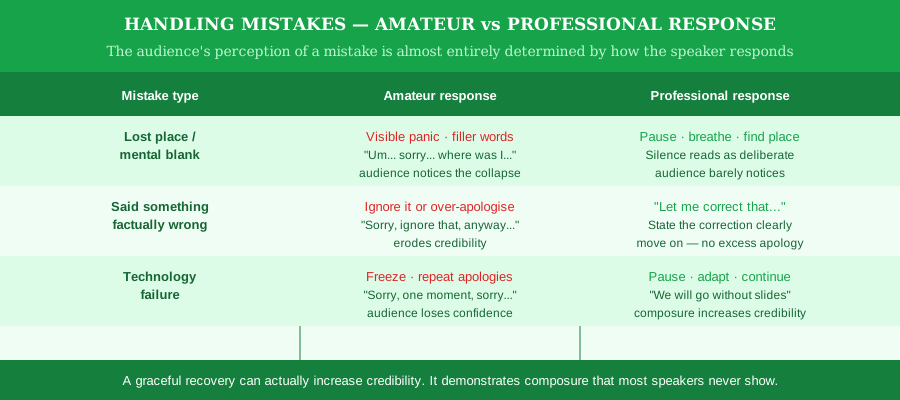
The diagram shows three common on-stage mistakes and the contrast between the amateur response and the professional response. In every case, the difference is composure — not what was said, but how quickly and calmly it was handled.
Worked Example: Recovering Mid-Talk
Topic: 'Why most professionals will never use AI effectively.' Here is a blank moment at the 8-minute mark — the data transition — and two possible responses.
The Three-Step Recovery Formula
Apply this sequence to any on-stage mistake regardless of type. The formula works because it is short, decisive, and forward-moving.
- ✓Pause — Silence reads as deliberate — do not fill it with 'um, sorry.' Three seconds of silence is invisible to the audience and is the fastest reset available to you
- ✓Name it if necessary — For a factual error only: 'Let me correct that — the correct figure is X.' One sentence. No apology. No explanation. Move on.
- ✓Continue without looking back — Dwelling on the mistake extends it. The audience follows the speaker's lead — if you move forward, they move with you
Key Takeaways
- 1Audience perception of a mistake is almost entirely determined by how the speaker responds, not what the mistake was
- 2Spotlight effect: you overestimate how much they noticed — your composure after is the only signal that matters
- 3Silence reads as deliberate — do not fill a blank moment with filler words or apologies
- 4Factual error: one-sentence correction, move forward immediately, no excess apology
- 5A graceful recovery can actually increase credibility — it demonstrates composure under pressure
What's Next
Continue through the course in order, or jump back to review earlier lessons.