Adapting Mid-Speech
A speech that doesn't adapt to its audience is a lecture read to a wall. The best speakers hold their content lightly enough to modify it in real time when they read the room — and they have specific techniques ready to deploy.
Four Signals, Four Adaptations
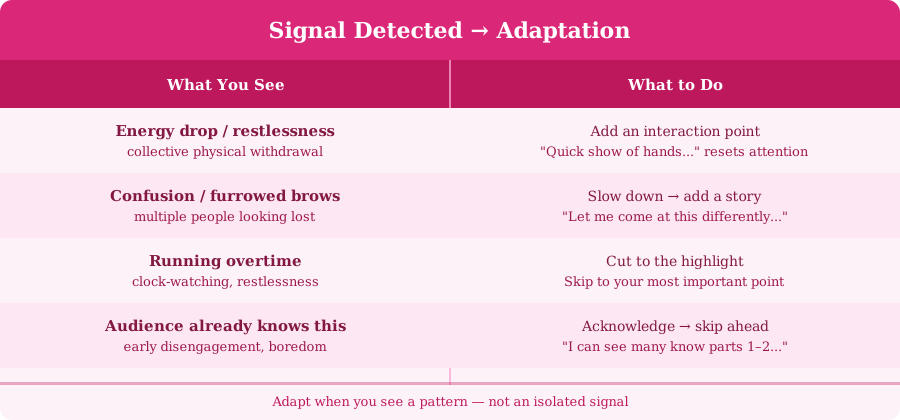
The diagram maps the four most common mid-speech signals to their corresponding adaptation. The goal is to have these automatic — so when you recognise the signal, the response is already there.
Worked Example: Adapting When the Room Already Knows
Topic: 'Why most professionals will never use AI effectively.' The talk is planned as 5 sections. At section 2, the room is clearly bored — they already know this.
The Flexible Speaker Mindset
Rigid speakers protect their preparation. Flexible speakers serve their audience. When the two come into conflict, the audience wins every time.
- ✓Your preparation is the tool; the audience is the purpose — The talk exists to serve the room in front of you — not to deliver the talk you prepared in the privacy of your office
- ✓Adapt only when you see a pattern, not an isolated signal — One yawn is tiredness or a late night. Four yawns across different sections of the room is a signal to adapt.
- ✓Naming the adaptation builds trust — 'Let me skip ahead because I can see you're already familiar with this' — the audience sees that you see them. That earns more attention than any individual slide.
Key Takeaways
- 1Adapt to patterns, not isolated signals — one phone is a habit; four phones is a pattern
- 2Pre-build a '60-second version' of every major section so the adaptation is available under pressure
- 3Energy drop: add an interaction point immediately — 'quick show of hands' resets attention in 10 seconds
- 4Audience already knows: acknowledge it, skip ahead, say where you're going — they will follow
- 5Naming the adaptation builds trust — the audience sees that you see them
What's Next
Continue through the course in order, or jump back to review earlier lessons.