Handling Difficult Questions
How you handle a challenging question in public often demonstrates your competence more clearly than your prepared remarks. Composure under pressure is one of the most credibility-building things an audience can observe.
Three Question Types — Amateur vs Professional Response
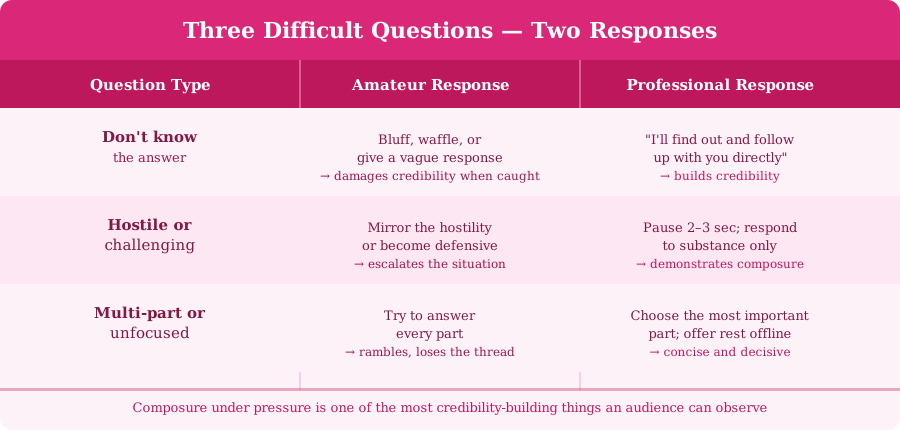
The diagram shows the three most common difficult question types and exactly what separates the amateur response from the professional one. In every case, the difference is composure and honesty — not superior knowledge.
Worked Example: Handling a Hostile Question
Topic: 'Why most professionals will never use AI effectively.' A hostile question comes: 'You're just fear-mongering. AI isn't replacing anyone who does real work.'
The Redirect Technique — For Questions You Cannot Address
Some questions take you off-message, into confidential territory, or outside your expertise. Redirect gracefully without deflecting.
- ✓Acknowledge what you can address — 'I can't speak to that specific case, but the general principle is...' — never leave the question completely unanswered
- ✓Offer a follow-up for the rest — 'That deserves more than I can give it here — let's connect after the session.' Follow through if you say it.
- ✓Always return to your key message — 'What I do know is [core message].' Never end on a deflection — the last thing said after a hard question should be yours, not theirs
Key Takeaways
- 1'I don't know but I'll find out' is more credible than bluffing — being caught bluffing is permanent damage
- 2Hostile questions: pause 2–3 seconds, respond to the substance only, never mirror the hostility
- 3Thanking a hostile questioner disarms the aggression and signals composure to the whole room
- 4Multi-part question: choose the most important part, acknowledge the rest, offer to discuss offline
- 5After any redirect, always return to your key message — never end on a deflection
What's Next
Continue through the course in order, or jump back to review earlier lessons.