Breath Control
Every vocal problem — thin voice, rushed pace, fading volume — has a breathing problem underneath it. Fix the breath and the delivery follows.
3 Problems & Their Fixes
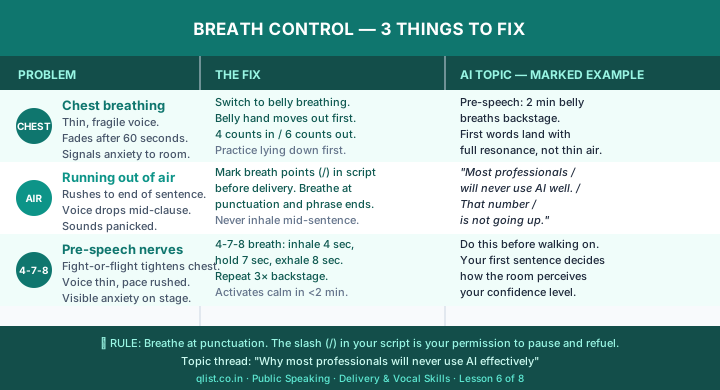
Most breath problems in speakers fall into three categories: chest breathing (weak voice), running out of air mid-sentence (rushing), and pre-speech nerves (tight chest). The diagram maps each to a fix and a live example.
Breath-Marked Script
Professional speakers mark their scripts with a slash (/) wherever they will breathe. This prevents running out of air mid-sentence and turns the breath point into a natural pause — which also helps the audience absorb the idea.
The Pre-Speech Routine
Your first sentence decides how the room reads your confidence level. Run this 3-minute routine backstage before any presentation.
- ✓2 minutes — Slow belly breaths — 4 counts in, 6 counts out. Only the belly moves.
- ✓4-7-8 breath × 3 — Inhale 4 sec, hold 7 sec, exhale 8 sec. Activates the calm response in under 2 minutes.
- ✓30 seconds — Hum on a comfortable pitch to warm up the resonators before your first word
- ✓Walk on slowly — Your pace as you take the stage signals confidence before you have said a word — do not rush
Key Takeaways
- 1Chest breathing produces thin, anxious sound — switch to belly breathing (belly hand moves first)
- 2Mark breath points (/) in your script at every phrase boundary before any important speech
- 3A breath point is also a pause — the two benefits are the same physical action
- 4The 4-7-8 breath (inhale 4, hold 7, exhale 8) calms the nervous system in under 2 minutes
- 5Your first sentence sets the room's perception — walk on slowly and breathe before you speak
What's Next
Continue through the course in order, or jump back to review earlier lessons.