Voice Modulation & Pitch
A monotone voice loses an audience within 90 seconds — not because the content is bad, but because a flat voice signals low conviction. These four levers fix that.
The 4 Levers
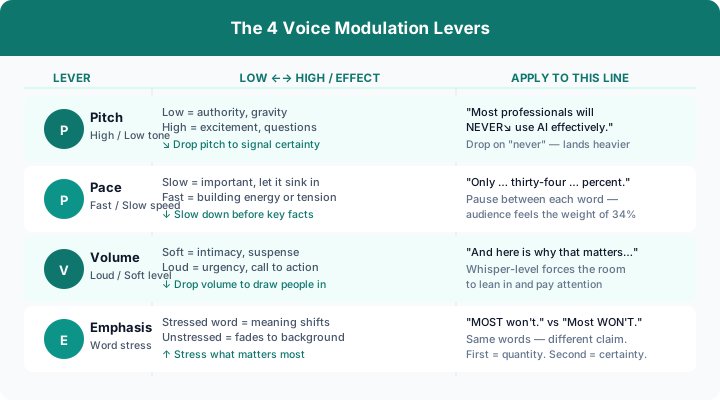
Every word you speak passes through four vocal controls. Most untrained speakers leave three of the four locked in place — resulting in flat delivery. The diagram maps each lever to its effect and shows a live example from the sample speech.
The Emphasis Test
Emphasis is the most underused lever. Shifting stress from one word to another in the same sentence changes the claim entirely. Here is the opening line of the sample speech — same words, three different meanings.
The Exaggeration Drill
Voice modulation is a physical skill. Reading about it doesn't build it — only repetition does. The fastest training method is deliberate exaggeration.
- ✓Step 1 — Take any two sentences from a speech and deliver them as flat as possible — pure monotone
- ✓Step 2 — Now deliver the same two sentences with theatrical over-modulation — exaggerate every pitch change, pause, and emphasis until it feels absurd
- ✓Step 3 — Dial back to 60–70% of the exaggerated version. That is your target delivery level
- ✓Why it works — Most speakers are calibrated too flat. Exaggeration resets the baseline upward, and 70% of exaggerated feels natural to the audience even if it feels big to you
Key Takeaways
- 1The 4 levers: Pitch (high/low), Pace (fast/slow), Volume (loud/soft), Emphasis (word stress)
- 2Drop pitch at the end of statements — upspeak on declaratives destroys authority
- 3Shifting emphasis to a different word shifts the entire meaning of a sentence
- 4Softer volume draws audiences in; it forces attention rather than demanding it
- 5Use the Exaggeration Drill: over-modulate, then dial back to 70% — that's your target
What's Next
Continue through the course in order, or jump back to review earlier lessons.