📝 Speech Structure · Lesson 9 of 9
The PREP Framework
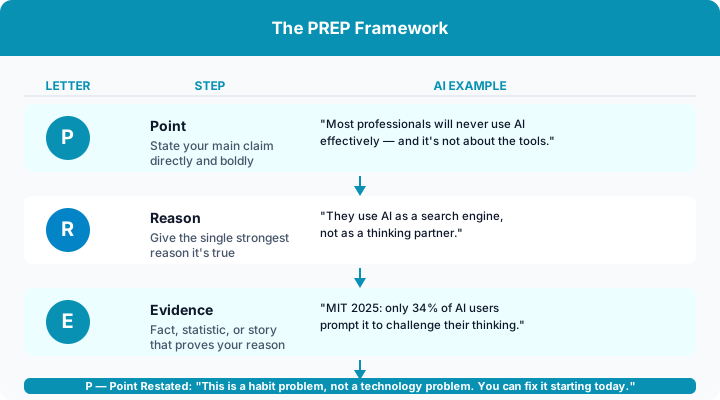
Four letters. Four steps. Works for a two-minute impromptu answer, a ten-minute speech, or anything in between. PREP is the fastest reliable structure in public speaking.
🔤
The Four Steps at a Glance
PREP gives every answer a beginning, a middle, and an end — even when you have 10 seconds to prepare. The final P is not a summary; it's a restatement with added weight, now that the evidence has done its work.
💡 Tip: PREP works for persuasive answers, not just speeches. Use it in job interviews, team meetings, and any situation where you're asked for an opinion.
🎯
A Full Worked Example
Here is the same speech topic — 'Why most professionals will never use AI effectively' — structured entirely in PREP. Notice how short each step is. PREP is not about volume; it's about sequence.
PREP — this example, spoken in under 90 seconds: POINT: "Most professionals will never use AI effectively — and it has nothing to do with the tools."
REASON: "They treat AI as a search engine rather than a thinking partner. They ask it for answers instead of asking it to challenge their assumptions."
EVIDENCE: "A 2025 MIT study found that only 34% of regular AI users had ever prompted it to critique their own thinking. The other 66% were using a jet engine to heat soup."
POINT: "This is a habit problem, not a technology problem. And unlike the tools, habits are completely within your control."
⚡
PREP vs. Other Frameworks
PREP is not always the best tool. Know when to reach for it and when to use something else.
- ✓Use PREP when — You need a quick, credible answer — interviews, debates, impromptu moments, short speeches
- ✓Use Monroe's Sequence when — You need to move an audience to action — fundraising, advocacy, sales
- ✓Use chronological structure when — You're explaining a process or telling a historical story in sequence
- ✓Apply the Rule of Three inside any framework — Three examples always feel more complete than two or four
⚠️ Watch out: The most common PREP mistake is making the Evidence step too long. One strong piece of evidence is better than three weak ones. Choose and move on.
Key Takeaways
- 1PREP = Point, Reason, Evidence, Point — four steps that work for any length of speech
- 2The final P is a restatement, not a summary — it lands with new weight after the evidence
- 3One sharp piece of evidence beats three vague ones
- 4PREP works best for persuasive answers, opinions, and short speeches
- 5For persuasive speeches with a call to action, Monroe's Sequence is the stronger tool
What's Next
Continue through the course in order, or jump back to review earlier lessons.