Thesis Statement
A thesis is one sentence that tells your audience exactly what you're going to argue or explain — and why it matters. Without it, your speech is a list of ideas. With it, your speech has a spine.
The 3-Part Formula
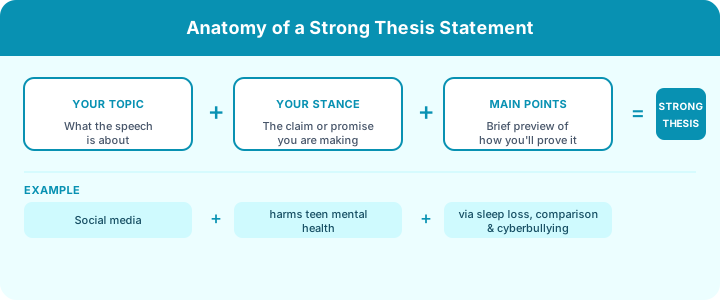
Most strong speech theses follow the same pattern: your topic, your stance on it, and a brief preview of how you'll support it. The diagram below shows how each part fits together.
Weak vs. Strong: A Simple Comparison
The most common student mistake is writing a thesis that is too vague to be argued against. A strong thesis is specific enough that a reasonable person could disagree with it.
- ✓Too vague — "AI is changing how we work." — This is obvious. It says nothing.
- ✓Too broad — "I will talk about problems with AI at work." — What problems? For whom?
- ✓Strong — "Most professionals will never use AI effectively because they treat it as a shortcut rather than a skill — but three learnable habits can close that gap."
Where the Thesis Goes
Place your thesis at the very end of your introduction — after the hook and the bridge, but before your first main point. This is the moment your audience mentally 'locks in' to your argument.
Key Takeaways
- 1A thesis is one declarative sentence — your central argument or promise
- 2Formula: Topic + Stance + Preview of main points
- 3A strong thesis is specific enough that someone could disagree with it
- 4Place it at the end of your introduction, right before the first main point
- 5Read it aloud — if it sounds robotic, rewrite it in plain speech
What's Next
Continue through the course in order, or jump back to review earlier lessons.