Body: Main Points
The body is where your argument lives. Each main point needs to be clearly stated, supported with evidence, and connected to the next — otherwise your speech is just a list.
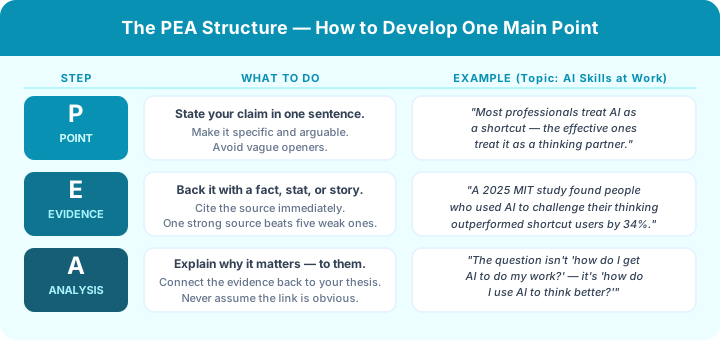
The PEA Structure
Every main point should follow the same three-step pattern: make the claim, prove it, then explain why it matters. The diagram below shows each step with an example from a speech on why most people will never use AI effectively.
How Many Main Points?
Stick to 2–4 main points per speech. Three is the most effective number — audiences naturally remember information in groups of three. More than four creates cognitive overload; your audience stops tracking.
- ✓Too few (1 point) — The speech feels thin — break it into 3 sub-components
- ✓Just right (2–4 points) — Each point gets enough time to be proven properly
- ✓Too many (5+ points) — Merge the weakest two — depth always beats breadth
Connecting Points with Transitions
Transitions stop your speech from feeling like bullet points read aloud. Use a simple three-part move between every main point:
Key Takeaways
- 1Use PEA for every main point: Point → Evidence → Analysis
- 2Limit your speech to 2–4 main points — three is the most memorable number
- 3The Analysis step is the most skipped and most important part
- 4Use internal summaries, signposts, and links between every point
- 5Balance time roughly equally across all main points
What's Next
Continue through the course in order, or jump back to review earlier lessons.