Conclusion & Call to Action
The last thing your audience hears is the thing they'll remember most. A strong conclusion doesn't just end the speech — it makes the whole speech feel worth it.
The 3-Part Structure
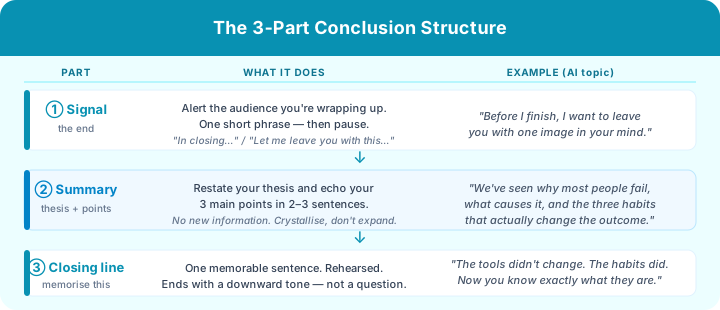
Every conclusion follows the same three-step sequence. The diagram shows what each part does and applies it to our worked example.
The Call to Action: Make It Specific
A call to action (CTA) is the one concrete thing you want the audience to do after your speech. Vague CTAs produce no results. The more specific and small the first step, the more people will actually take it.
- ✓Name the exact action — Not 'explore AI tools' — but 'open ChatGPT tonight and ask it one question about your work'
- ✓Make the first step tiny — The smaller the barrier, the higher the follow-through
- ✓Add a timeframe — 'By Friday' is far more effective than 'sometime soon'
Bookending: Return to Your Opening
The most powerful closing technique is to return to your opening hook — complete the story, answer the question, or resolve the tension you created. This gives the audience a satisfying sense of closure.
Key Takeaways
- 1Conclusions have 3 parts: signal the end, summary, closing line
- 2Never add new information in the conclusion — only crystallise what's been said
- 3A specific, small-step CTA gets far more action than a vague one
- 4Bookending — returning to your opening — creates powerful narrative closure
- 5Memorise your final line; end with a downward tone to signal confidence
What's Next
Continue through the course in order, or jump back to review earlier lessons.