Filler Words & How to Eliminate Them
Filler words do not signal low intelligence — they signal that you are uncomfortable with silence. The fix is not to think faster. It is to stop fearing the pause.
Before vs. After — The 4 Fillers
Every filler has the same fix: replace it with silence. The diagram shows the four most common fillers — um, like, right, so — each with a before/after example from the sample speech.
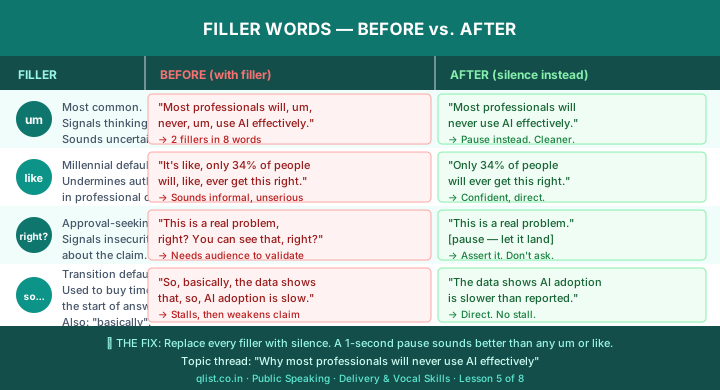
The One Fix: Replace with Silence
Every elimination technique reduces to the same action — when you feel the urge to say 'um' or 'like', stop, say nothing, and move to the next word. Here is what that sounds and feels like in practice.
The Filler Count Drill
Awareness is the bottleneck — most people cannot hear their own fillers until they are trained to. This drill builds that awareness fast.
- ✓Solo version — Record 90 seconds on any topic. Replay and tap the desk every time you hear a filler. Count the taps.
- ✓Partner version — Ask someone to raise a hand every time you say your target filler during a practice run. Compete with yourself to lower the count each round.
- ✓Target — Most people drop filler frequency by 60–80% within two weeks of daily counting
- ✓Right? — Pay special attention to approval-seeking fillers — 'right?', 'you know?' — they signal insecurity about your own claim. Assert it; do not ask for permission.
Key Takeaways
- 1Filler words signal discomfort with silence — the fix is to stop fearing the pause
- 2Replace every filler with silence: stop, say nothing, continue with the next word
- 3Record yourself for 90 seconds — count every filler — that is your baseline
- 4Eliminate one filler at a time over two weeks; sequential beats blanket suppression
- 5Approval-seeking fillers ('right?', 'you know?') signal insecurity — assert, never ask
What's Next
Continue through the course in order, or jump back to review earlier lessons.