Emotional Tone & Emphasis
Facts inform. Tone persuades. When your vocal register and your words conflict, the audience believes the tone every time — not the words.
The 4 Registers
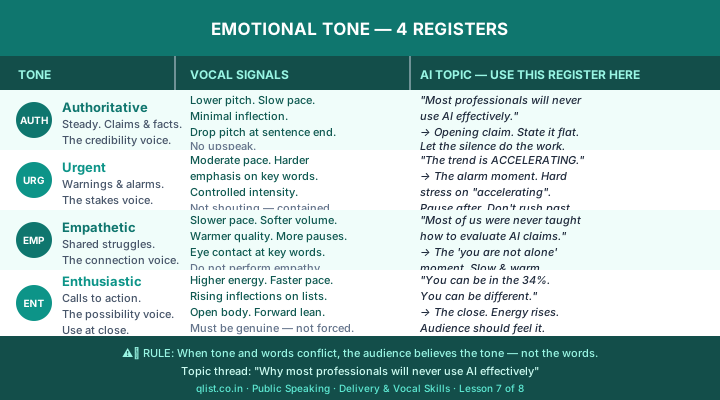
Every part of a speech calls for a different tonal register. The diagram maps the four most important ones — authoritative, urgent, empathetic, enthusiastic — to their vocal signals and to exact moments in the sample speech.
Emphasis — One Word Changes Everything
Emphasis is placing extra vocal weight on a single word. Shifting emphasis within the same sentence shifts the meaning entirely. Here is the sample speech claim delivered with three different emphases.
Authentic vs. Performed Emotion
Audiences are sensitive to performed emotion — the overenthusiastic opener, the forced gravitas. Both break trust within seconds. Authenticity comes from reconnecting with why the content matters, not from acting.
- ✓The mismatch problem — Saying 'I'm thrilled to be here' in a flat tone convinces nobody. The tone overrides the words.
- ✓The stale speech fix — If you have given the same speech many times and it feels mechanical, find one person in the room who has never heard it and speak only to them. Freshness returns.
- ✓Tone matches content — Bad news → calm and measured. Good news → warm and open. Complex data → deliberate and confident. Humor → near-deadpan (the audience supplies the laughter).
Key Takeaways
- 1When tone and words conflict, audiences believe the tone — not the words
- 2Four registers: authoritative (facts), urgent (alarms), empathetic (connection), enthusiastic (close)
- 3Shifting emphasis to a different word shifts the meaning of the entire sentence
- 4Mark your emphasis word in the script — do not leave it to chance on the day
- 5Authenticity beats performance: reconnect with why the content matters before every speech
What's Next
Continue through the course in order, or jump back to review earlier lessons.