Emotional Appeals (Pathos)
Neuroscience shows that people with damage to the emotional centres of the brain cannot make decisions — even simple ones. Emotion is not opposed to rational thinking. It is what makes thinking lead to action.
Ethos, Logos, Pathos — All Three Together
Aristotle's three appeals work as a system. Most weak speeches have logos (data and logic) but are missing ethos (why the speaker should be trusted) and pathos (why the audience should care). The diagram shows all three applied to the same speech.
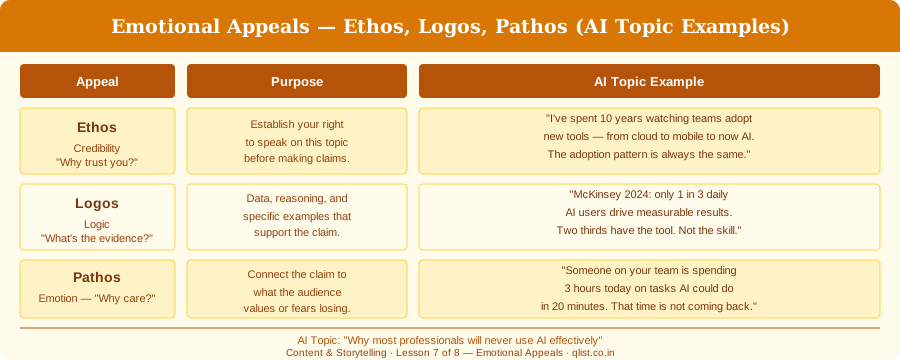
Worked Example: All Three in Sequence
Topic: 'Why most professionals will never use AI effectively.' Here is a short passage that moves through ethos, logos, and pathos in order.
One Specific Person — More Powerful Than Statistics
Research by psychologist Paul Slovic shows that people act more for a single identified individual than for statistical groups — even much larger ones. One person's story creates more response than data about millions.
- ✓Name a specific person — Not 'teams who adopted AI' but 'one manager in the room who cut her weekly report from four hours to forty minutes'
- ✓Describe the specific consequence — Not 'significant time savings' but 'she used those three hours to mentor two junior colleagues that same week'
Key Takeaways
- 1Emotion is not opposed to logic — it is what makes logic lead to action
- 2Build in order: Ethos first, then Logos, then Pathos — skipping the order breaks persuasion
- 3Pathos without evidence is manipulation; logos without pathos is a report — combine both
- 4One specific person's story drives more action than statistics about thousands
- 5Connect data to personal consequence: not 'two thirds fail' but 'someone on your team is in that group today'
What's Next
Continue through the course in order, or jump back to review earlier lessons.