📖 Content & Storytelling · Lesson 5 of 8
Rhetorical Devices
The same language patterns appear in every memorable speech from Cicero to Churchill to today. They work because the human brain responds to rhythm, contrast, and repetition — not because the speaker is clever.
🔄
Four Devices — Pattern and Worked Example
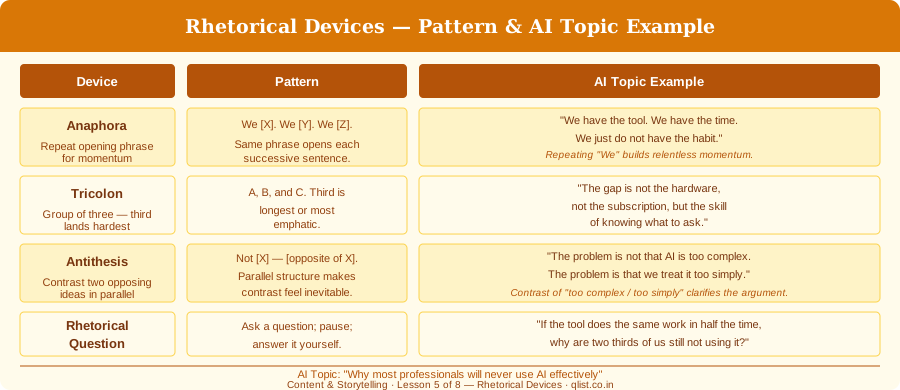
Each device has a simple pattern you can apply to any topic. The diagram shows the pattern and an example from the sample speech thread.
💡 Tip: Use these at peak moments only — your opening hook, your key argument, your closing call to action. Overuse turns them into noise.
🎯
Worked Example: All Four in One Passage
Topic: 'Why most professionals will never use AI effectively.' Here is a short passage that uses all four devices in sequence.
Passage combining anaphora, tricolon, antithesis, rhetorical question: "If the tool does the same work in half the time, why are two thirds of us still not using it?
[Rhetorical question — opens with the problem.]
The problem is not that AI is too complex. The problem is that we treat it too simply.
[Antithesis — contrasts 'too complex' with 'too simply'.]
The gap is not the hardware, not the subscription, but the skill of knowing what to ask.
[Tricolon — third item lands hardest.]
We have the tool. We have the time. We just do not have the habit.
[Anaphora — 'We' repeated for momentum.]"
⚠️ Watch out: Do not label the devices when you speak. They work invisibly. The moment you explain 'this is an antithesis,' the effect disappears.
📍
Where to Place Them
Rhetorical devices have three natural homes in any speech.
- ✓Opening hook — A rhetorical question or antithesis in your first sentence earns immediate attention
- ✓Key argument — Tricolon or anaphora at your most important claim makes it stick in memory
- ✓Closing call to action — Anaphora in your final lines creates momentum and a natural ending — the audience feels it is complete
Key Takeaways
- 1Anaphora: repeat an opening phrase across successive sentences to build momentum
- 2Tricolon: three parallel items feel complete — the third lands hardest
- 3Antithesis: contrast two opposing ideas in parallel structure to make both instantly clear
- 4Rhetorical question: ask, pause, then answer — directs audience thinking without requiring a response
- 5Place devices at peak moments only: opening, key argument, closing — overuse removes the effect
- 6Never explain or label a device while speaking — they work invisibly
What's Next
Continue through the course in order, or jump back to review earlier lessons.