Storytelling Frameworks
Facts inform. Stories persuade. The most credible, memorable speeches use a deliberate narrative structure — not to manipulate, but to help an audience follow, feel, and remember. Pick one framework and use it consistently.
Two Frameworks — Both Applied to the Example
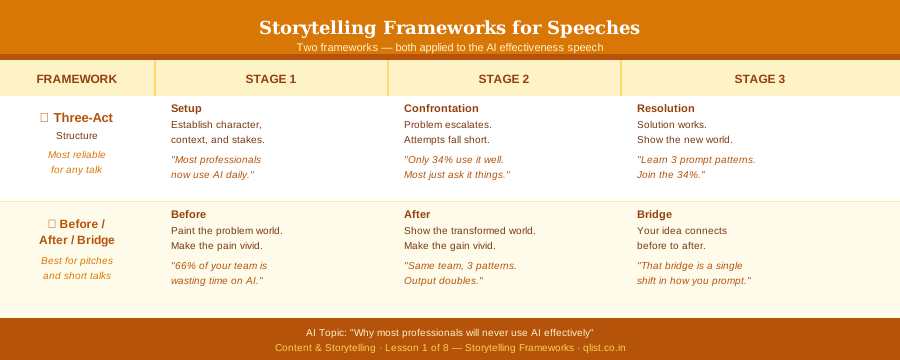
The diagram shows the two most practical speech frameworks side by side — Three-Act Structure for longer talks, and Before/After/Bridge for pitches and short presentations. Each stage is mapped to the AI effectiveness speech so you can see exactly how abstract structure becomes concrete content.
Three-Act in Full — Worked Example
The Three-Act Structure is the most reliable framework for any speech longer than five minutes. Here is this example talk built out across all three acts.
Which Framework to Use When
You do not need to learn every storytelling framework. Two covers almost every speaking situation.
- ✓Three-Act Structure — for talks of 5 minutes or more — Long enough to develop a confrontation with real stakes. Works for keynotes, training sessions, team presentations, and persuasive talks where you need the audience to change their behaviour.
- ✓Before/After/Bridge — for pitches and short presentations — When you have 2–5 minutes. State the problem world (Before) in one or two vivid sentences. State the transformed world (After) in one or two sentences. Then present your idea as the Bridge. No filler, no preamble.
Key Takeaways
- 1Three-Act: Setup → Confrontation → Resolution — do not rush or skip the Confrontation
- 2Before/After/Bridge: paint the problem world, paint the transformed world, present your idea as the bridge
- 3Both frameworks work by creating a gap — then positioning your idea as how the audience crosses it
- 4Your audience is the hero — you are the guide who gives them the tool to solve the problem
- 5A framework decides the order of your ideas — it is not a script to fill in mechanically
What's Next
Continue through the course in order, or jump back to review earlier lessons.