🤝 Nonverbal Communication · Lesson 8 of 8
Dress & Appearance
Audiences form a first impression before you say a word. Your clothing, fit, and colour are a nonverbal statement about how seriously you take this presentation — and how much you respect the people in the room.
👔
Three Decisions — What Works and What Distracts
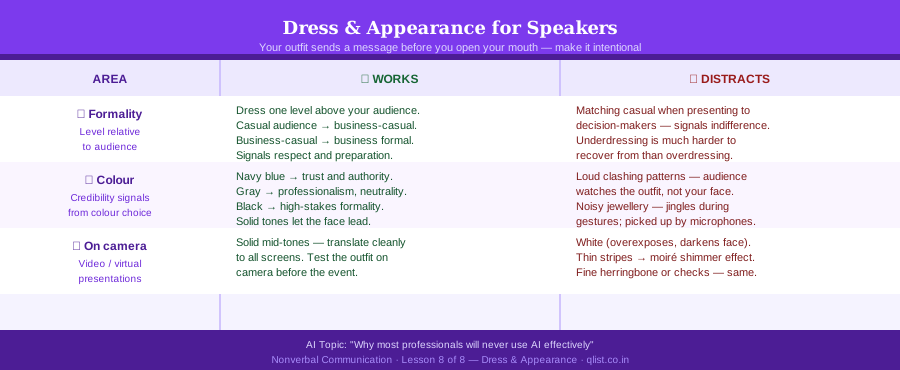
Most appearance mistakes fall into three areas: getting the formality level wrong, choosing colours that pull attention to the outfit rather than the face, and not testing clothing on camera for virtual presentations.
💡 Tip: Lay out your complete outfit — including accessories — the night before. Never make wardrobe decisions on the day of an important presentation. Decision fatigue and rushing produce regrettable choices.
🎤
The One-Level-Up Rule — Worked Example
What counts as 'one level up' depends entirely on the audience. The AI effectiveness talk illustrates both ends of the spectrum.
Same talk — two very different audiences and the right dress level for each: AUDIENCE: Start-up product team (casual)
Room dress code: jeans, hoodies, trainers.
Speaker dresses: clean dark chinos, plain button shirt, leather shoes — no tie.
Result: looks prepared and intentional without being unapproachably formal.
AUDIENCE: C-suite strategy offsite (business formal)
Room dress code: suits, blazers, polished shoes.
Speaker dresses: dark suit, white or pale blue shirt, minimal accessories.
Result: matches the room's register and signals the topic deserves serious attention.
In both cases the principle is identical: one level above the average person in the room — not two levels, which creates distance.
⚠️ Watch out: Underdressing is much harder to recover from than overdressing. A jacket you do not need can be removed. A t-shirt at a boardroom presentation cannot be unseen.
📋
Quick Pre-Presentation Checklist
Run through these three checks the evening before any significant presentation.
- ✓Fit check — Try the full outfit on and sit down, stand up, and gesture. Anything that pulls, gaps, or rides up while presenting will do the same on stage — and you will feel it the whole time.
- ✓Camera test (for virtual or hybrid) — Put the outfit on and sit in your presenting position on camera. Check for overexposure (white tops), moiré shimmer (fine stripes or checks), and whether the colour makes your face appear darker or washed out.
- ✓Noise check — Gesture with both arms. Do any accessories jingle or catch? Bracelets and long necklaces often create sounds that lapel microphones amplify clearly. Remove or secure them.
Key Takeaways
- 1One level above your audience: casual room → business-casual; business-casual room → formal
- 2Navy blue, gray, and black are the most universally credible colours for speakers
- 3Avoid loud patterns and noisy jewellery — audience watches the outfit, not your face
- 4On camera: avoid white (overexposes) and thin stripes (moiré shimmer effect)
- 5Lay the full outfit out the night before — never make wardrobe decisions on the day
What's Next
Continue through the course in order, or jump back to review earlier lessons.