🤝 Nonverbal Communication · Lesson 2 of 8
Eye Contact Techniques
Direct eye contact creates a private moment between speaker and listener — a sense of personal connection that no slide or script can replicate. Most speakers either avoid it or do it wrong.
👁️
4-Situation Guide
The 3-second rule governs all four situations in the diagram: hold eye contact for the length of one complete thought (~3 seconds), then move to a new person. The right and wrong approach changes slightly by situation.
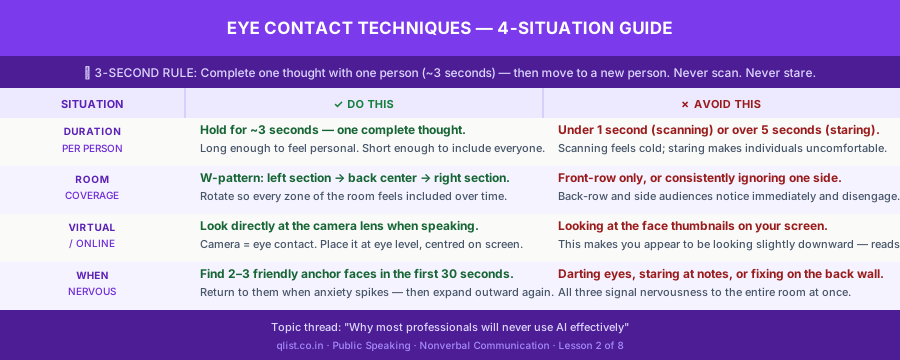
💡 Tip: For virtual presentations: put a small sticky note with a smiley face just below your camera lens. It reminds you to look at the lens, not the faces on screen — which makes your eye contact land correctly for everyone watching.
🎤
The Same Line — Two Deliveries
Eye contact changes how a line lands. Here is the same opening sentence from the sample speech delivered two different ways.
Opening: "Only 34% of professionals use AI effectively.": SCANNING DELIVERY:
Speaker looks down at notes → quick glance left → quick glance right → back to notes.
"Only 34% of professionals use AI effectively."
Result: The stat floats away. Nobody feels it was directed at them.
EYE-CONTACT DELIVERY:
Speaker walks to centre. Pauses. Finds one person in the left section and holds for 3 seconds.
"Only 34%..."
Moves to a person in the back center.
"...of professionals use AI effectively."
Result: Two people feel personally addressed. The rest of the room feels the weight of the pause.
⚠️ Watch out: The most common mistake in large rooms: speaking only to the front two rows while the back half of the audience watches a speaker who never looks at them. Use the W-pattern to rotate sections every 2–3 sentences.
⚓
Anchor Faces — The Nervous Speaker's Tool
When nerves spike mid-speech, eye contact is usually the first thing to collapse. The anchor face technique gives you a reliable reset.
- ✓In the first 30 seconds, identify 2–3 friendly faces — Look for people who are nodding, leaning in, or smiling. They are your anchors.
- ✓When anxiety spikes, return to one anchor face — Deliver one complete sentence to them. Their positive response slows your nervous system down.
- ✓Then expand back out to the full room — Use the anchor as a reset point, not a permanent destination. Resume the W-pattern after 1–2 sentences.
Key Takeaways
- 13-second rule: one complete thought per person — under 1s is scanning, over 5s is staring
- 2W-pattern: rotate across left, back-center, and right sections so every zone feels included
- 3Virtual: look at the camera lens, not the face thumbnails — thumbnails make you appear to look downward
- 4Find 2–3 anchor faces in the first 30 seconds to reset to when nerves spike
- 5Back-row audiences notice immediately if a speaker never looks at them — include them from the start
What's Next
Continue through the course in order, or jump back to review earlier lessons.