🤝 Nonverbal Communication · Lesson 7 of 8
Mirroring the Audience
The best speakers do not perform at an audience — they speak with them. Mirroring is how you create that feeling: match where the audience is, earn their trust, then take them where you want to go.
🪞
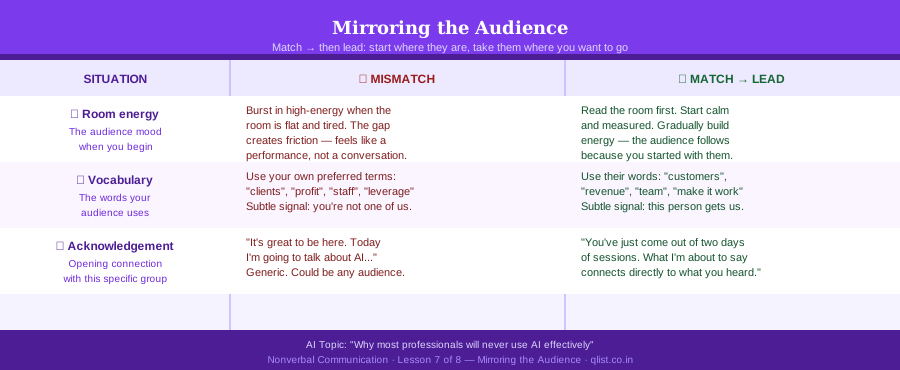
Three Mirroring Techniques — Mismatch vs Match
Mirroring operates on three levels: the room's energy, the vocabulary the audience uses, and how specifically you acknowledge the group you are speaking to. The diagram shows the mismatch and the match for each.
💡 Tip: Before any talk, find out one specific thing about this audience — what they have just been through, a term they use, something that happened in the room before you. Reference it early. The room relaxes immediately.
🎤
Vocabulary Mirroring — Worked Example
The same point about AI effectiveness lands differently depending on whether the speaker uses the audience's language or their own.
Opening to a room of mid-level managers — same message, different vocabulary: MISMATCHED (speaker's vocabulary):
"The core issue is suboptimal leverage of AI-enabled workflows at the individual contributor level."
The audience hears: jargon, distance, not-one-of-us.
MIRRORED (audience's vocabulary):
"Most people on your teams are using AI the same way they use Google — to find things. That's not the problem I'm here to solve."
The audience hears: someone who has spoken to people like us before.
Same idea. The second version uses everyday language because that is how managers talk to their teams. Mirroring vocabulary is not dumbing down — it is meeting people where they actually are.
⚠️ Watch out: Do not mirror vocabulary you would not use naturally — forced use of slang or jargon you are not familiar with reads as patronising. Stick to the ordinary words your audience uses for ordinary things.
📋
How to Prepare the Mirror
Effective mirroring is not improvised — it is prepared. Three things to research before any talk.
- ✓Find out the room's context — What happened before you? Has the audience just sat through two hours of sessions, or are they fresh? A tired room needs a slower, more measured opening than an energised morning crowd.
- ✓Learn one piece of their vocabulary — Ask the organiser: how does this group talk about your topic? 'Customers' or 'clients'? 'Budget' or 'investment'? Use their word once in your opening and watch the room respond.
- ✓Prepare one specific acknowledgement — Replace 'great to be here' with one specific line about this group: the city, the event, something a previous speaker said, or a challenge unique to their industry. Generic openers create generic connection — which is none.
Key Takeaways
- 1Match → then lead: start at the audience's energy level, earn trust, then raise the room
- 2Use the audience's vocabulary — 'customers' not 'clients' if that is how they speak
- 3Replace generic openers with one specific acknowledgement of this room, event, or group
- 4Research the room's context before arriving — what happened before you shapes how they receive you
- 5Mirroring is not mimicry — only use vocabulary and energy that feels natural to you
What's Next
Continue through the course in order, or jump back to review earlier lessons.