🤝 Nonverbal Communication · Lesson 4 of 8
Hand Gestures
Hands are the second most noticed nonverbal signal after the face. Purposeful gestures reinforce your message. Nervous gestures — fidgeting, pointing, clutching — tell the audience you are not fully in control.
🤲
Four Gesture Rules — Do and Avoid
The diagram maps the four most important hand gesture rules. Each rule has a clear do and avoid — knowing both is what makes the difference between natural and distracting.
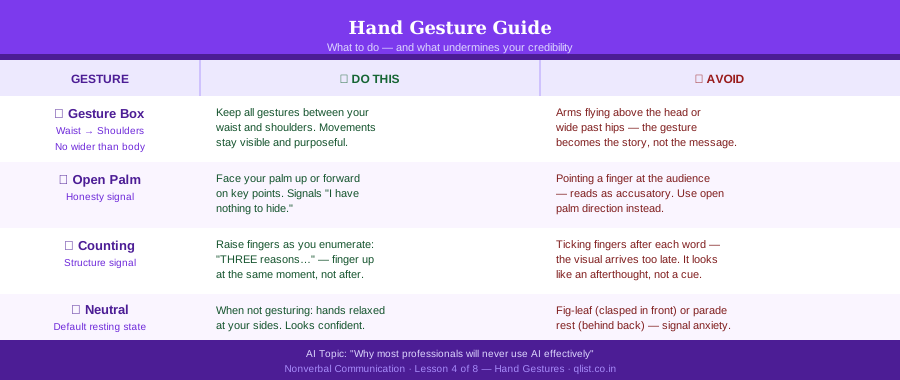
💡 Tip: When not actively gesturing, rest hands at your sides — neutral position. It feels awkward but looks confident. The fig-leaf (clasped in front) and parade rest (behind back) both signal anxiety.
🎤
Timing the Gesture — Worked Example
Gesture timing is the single most overlooked detail. The gesture must arrive at the same moment as the word — or just before. Late gestures read as afterthoughts.
Enumerating the problem: "There are THREE reasons most professionals will never use AI effectively.": WRONG TIMING:
"There are three reasons" — pause — then raise three fingers.
Result: The audience already processed the word 'three'. The gesture adds nothing. It looks mechanical.
CORRECT TIMING:
Speaker raises three fingers while saying "THREE" — the visual and the word land together.
Then: "First reason" — index finger stays up.
"Second reason" — second finger joins.
"Third reason" — three fingers held out.
Result: The audience can track the structure without effort. The gesture does real cognitive work.
⚠️ Watch out: Self-touching — adjusting hair, rubbing the neck, touching the face — is a pacifying gesture. The brain does it to reduce stress. The audience reads it as anxiety or dishonesty.
📋
Two Rules to Start With
If gestures feel unnatural when you speak, start with just two rules and leave everything else alone until they are automatic.
- ✓Stay in the gesture box — Waist to shoulders, no wider than your body. Any gesture within this zone looks purposeful. Gestures outside it look agitated.
- ✓Hands at sides when not gesturing — Commit to this for one full practice session. It will feel strange. On camera or on stage it looks composed and in control.
Key Takeaways
- 1Gesture box: waist to shoulders, no wider than body — all movement stays purposeful inside this zone
- 2Neutral position: hands at sides between gestures — more confident than fig-leaf or parade rest
- 3Open palm facing up or forward signals honesty — pointing a finger signals aggression
- 4Time counting gestures to land with the word, not after it
- 5Self-touching (face, neck, hair) is a stress pacifier — the audience reads it as anxiety
What's Next
Continue through the course in order, or jump back to review earlier lessons.