🤝 Nonverbal Communication · Lesson 6 of 8
Nervous Habits to Avoid
Nervous habits are involuntary stress responses — your body soothing itself under pressure. You do not feel them. Your audience sees every one of them. The fix is not willpower; it is awareness followed by a deliberate replacement.
🔄
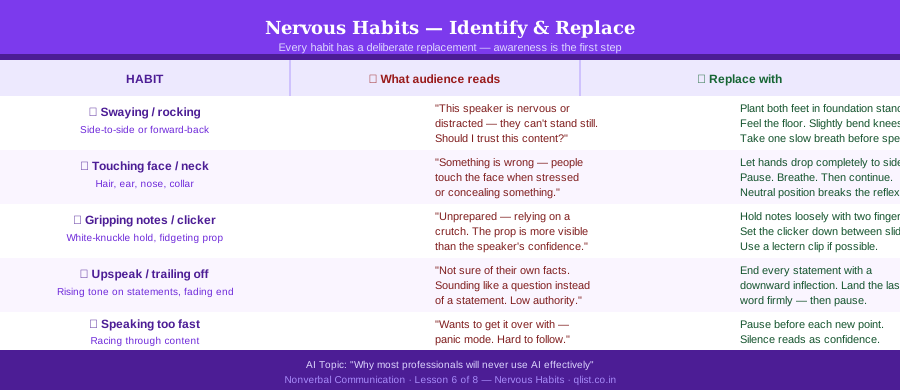
Five Habits — What the Audience Reads — What to Do Instead
The diagram maps the five most common nervous habits to the exact signal each sends to an audience — and the specific replacement behaviour that breaks the pattern.
💡 Tip: Video is the only reliable way to find your habits. Record 5 minutes of yourself presenting, watch it with the sound off, and note every repeated physical movement. You will find 1–2 habits you had no idea you had.
🎤
The Same Opening Line — Two Deliveries
Nervous habits compound. A speaker who sways, touches their face, and trails off their sentences simultaneously reads as unprepared — even if the content is excellent.
Opening the sample speech — same line, two physical states: NERVOUS DELIVERY:
Speaker sways left-right. Grips notes with both hands.
"So, um... most professionals — I mean — only about 34% actually use AI... effectively?"
(trailing off, rising tone on 'effectively')
Audience reads: uncertain, underprepared, seeking approval.
CONFIDENT DELIVERY:
Speaker stands still. Notes held loosely in one hand.
"Only 34% of professionals use AI effectively."
Pause. Downward inflection. Eye contact held.
Audience reads: this person knows exactly what they are talking about.
⚠️ Watch out: The most damaging habit is upspeak — ending statements with a rising tone. It turns every fact into a question and every claim into a request for permission. Record yourself and count how many statements end on a rising pitch.
📋
How to Break a Habit — The Replacement Method
Pick your top two habits from the diagram. For each one, decide the replacement before your next presentation.
- ✓Name it and pair it — Write: 'When I feel the urge to [habit], I will [replacement].' Example: 'When I feel the urge to touch my face, I will drop both hands to my sides and take one breath.'
- ✓Practise the replacement in low-stakes settings — Use the replacement in everyday conversations and meetings — not just formal speeches. The more automatic it becomes under no pressure, the more it survives under stress.
- ✓Review video after each practice session — Look for the one habit you targeted. Is it reducing? Once a replacement is automatic, move to the next habit on your list.
Key Takeaways
- 1Nervous habits are stress reflexes — you cannot stop them by willpower alone; replace them with a deliberate behaviour
- 2Swaying / rocking → plant feet in foundation stance, slightly bent knees
- 3Touching face / neck → let hands drop completely to sides, then breathe
- 4Upspeak (rising tone on statements) → end every statement with a downward inflection and a pause
- 5Speaking too fast → pause before each new point; silence reads as confidence
- 6Video with sound off is the only reliable way to identify habits you cannot feel
What's Next
Continue through the course in order, or jump back to review earlier lessons.