🤝 Nonverbal Communication · Lesson 1 of 8
Posture & Stance
Your posture sends a message before you speak. The audience reads your body in the first three seconds — long before you deliver your opening line.
🏛️
Confident vs Anxious — 5 Checkpoints
Every posture problem maps to one of five body zones. The diagram shows what confident posture looks like at each zone — and what the anxious version signals to the audience.
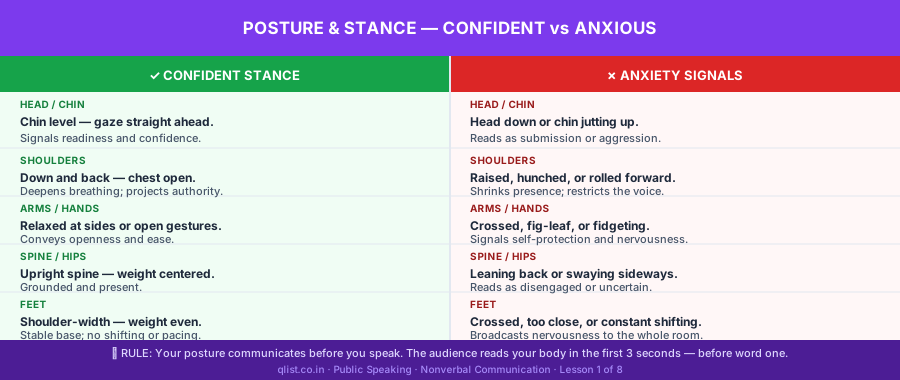
💡 Tip: Record yourself presenting once with no preparation. Watch only the first 5 seconds with the sound off. That is what your audience sees before you have said anything.
🎤
Posture in Action — Worked Example
Here is how posture directly affects the first impression in a speech about AI in the workplace.
The same opening line — two different bodies: ANXIOUS VERSION:
Speaker walks to the front, weight on left foot, shoulders slightly forward, one hand clasped over the other (fig-leaf). Pauses, looks down at notes.
"So... today I wanted to talk about why... um... AI is something professionals need to think about."
CONFIDENT VERSION:
Speaker walks to the front, stops centre stage, feet shoulder-width, shoulders back, hands relaxed at sides. Holds eye contact for two seconds before speaking.
"Only 34% of professionals use AI tools effectively. Today you will find out why — and what to do about it."
The line quality is the same. The body makes the difference.
⚠️ Watch out: The fig-leaf position (hands clasped low in front) is the single most common posture error in presentations. It reads as defensive and shrinks your vocal projection by restricting the diaphragm.
⚡
The 2-Minute Setup
Two minutes of deliberate physical preparation before you walk on stage resets your body's default posture from 'desk worker' to 'speaker'.
- ✓Roll shoulders back and down × 3 — Reverses the forward hunch from sitting at a computer all day.
- ✓Feet wide, hands on hips, chin up for 60 seconds — Expansive posture in private lowers cortisol and raises your confidence baseline before you walk out.
- ✓Take one slow breath from the diaphragm — Resets breathing from the chest (anxiety) to the belly (calm). Your voice immediately sounds steadier.
Key Takeaways
- 1The audience reads your posture in the first 3 seconds — before you say a word
- 2Five checkpoints: chin level, shoulders back, arms relaxed, spine upright, feet shoulder-width
- 3Avoid the fig-leaf position — it is the most common posture error and restricts vocal projection
- 4The same opening line lands completely differently depending on your body when you deliver it
- 52-minute setup: shoulder rolls, expansive pose, one diaphragm breath — do this before every speech
What's Next
Continue through the course in order, or jump back to review earlier lessons.