📊 Visual Aids & Technology · Lesson 4 of 8
Microphone & Podium Technique
Technology should amplify your message — but equipment you are not comfortable with amplifies your discomfort instead. The audience should hear your words clearly and never be reminded that equipment exists.
🎤
Three Common Mic Mistakes and Their Fixes
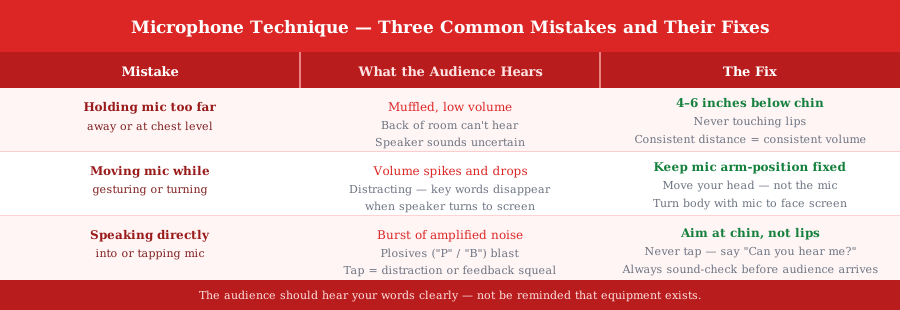
The diagram covers the three mistakes that affect most speakers who use handheld or podium microphones for the first time.
💡 Tip: Always do a mic check at your actual speaking volume — not a quiet murmur. Walk the stage to find feedback zones. The two minutes you invest before the session prevent every equipment problem during it.
🎯
Worked Example: Sound Check and Opening Delivery
Topic: 'Why most professionals will never use AI effectively.' Here is what good mic technique sounds like in practice.
What a confident mic check and opening sounds like: [Sound check, 2 minutes before start — mic at chin level, 5 inches away:]
"Can you hear me at the back? Comfortable volume?"
[Adjust if needed. Step back from podium to open stance.]
[Opening — handheld mic steady, position consistent:]
"I want to start with a number."
[Pause. Let the room settle.]
"Twelve percent."
[Another pause. Don't move the mic. Let the number land.]
"That is the percentage of professionals who, by independent research, use AI effectively. Not the percentage who have access to it — seventy-two percent have access. Twelve percent use it well."
[The mic is never the story. The number is.]
🏛️
The One Rule for Podium Use
The podium is a surface for your notes — not a wall to hide behind.
- ✓Rest fingertips lightly on the edge — never grip the sides — White-knuckle gripping transmits tension directly to the audience; they can see it
- ✓Step out from behind it for key moments — Closing arguments, emotional points, and calls to action land harder when you are fully visible and unobstructed
- ✓Know where the mute button is before the session begins — You will need it unexpectedly — for a cough, a side conversation, or a technical pause
Key Takeaways
- 1Hold a handheld mic 4–6 inches below the chin — consistent distance means consistent volume
- 2Never tap or blow into the mic — say 'Can you hear me?' and adjust gain with the technician
- 3Sound check at your actual speaking volume before the audience arrives — not a quiet murmur
- 4The podium is a note surface, not a wall — rest fingertips lightly; step out from behind it for key moments
- 5Know where the mute button is before the session starts
What's Next
Continue through the course in order, or jump back to review earlier lessons.