📊 Visual Aids & Technology · Lesson 6 of 8
Teleprompters & Speaker Notes
Even experienced speakers use notes and scripts. The difference between reading that looks natural and reading that looks robotic is not how well you have memorised the content — it is what you have written in your notes and how you use them.
📝
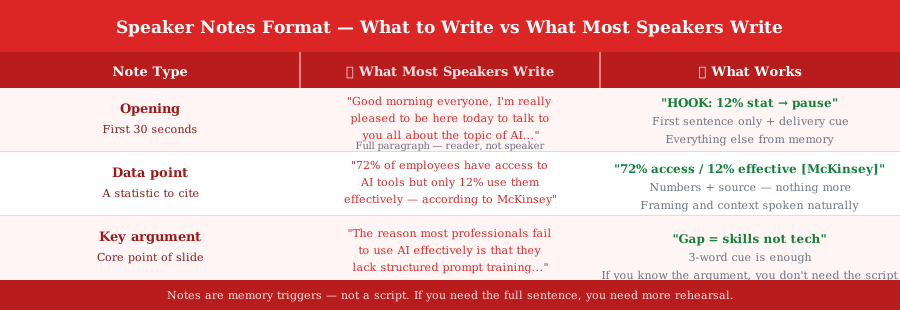
Speaker Notes Format — What to Write vs What Most Speakers Write
The diagram compares full-script notes (which cause reading-voice) against cue-style notes (which allow natural delivery) across three common note types.
💡 Tip: Format notes with minimum 18pt font, bold on words to stress, and // markers for planned pauses. Paper is more reliable than a phone — it never locks, lags, or needs scrolling.
🎯
Worked Example: Cue-Style Notes in Practice
Topic: 'Why most professionals will never use AI effectively.' Here is what the cue-style notes look like for the opening, alongside the full spoken delivery they produce.
Cue notes → spoken delivery: NOTES CARD:
"HOOK: 12% stat // pause
ask: last time you used AI?
72% access / 12% effective [McKinsey]
gap = skills not tech
today: fix that"
——
SPOKEN DELIVERY (from those five cues):
"I want to start with a number. Twelve percent."
[pause]
"Think about the last time you used AI at work. How long did it take to get a result you were happy with?"
[pause]
"Research from McKinsey puts it plainly — seventy-two percent of professionals have access to AI tools. Only twelve percent use them effectively."
"That gap is not a technology problem. It is a skills problem."
"That is what today is about."
👁️
The Eye Contact Pattern
Notes do not prevent eye contact — only the wrong technique does. One pattern makes notes invisible.
- ✓Read phrase → look up → deliver phrase → look down → repeat — Speak to the audience, glance at your notes — not the reverse. The delivery happens above the notes, not below them.
- ✓Never read a full sentence while looking down — The audience loses eye contact the moment you look down — you lose them
- ✓For teleprompters: vary your eye focus slightly — Constant dead-centre gaze reads as glassy — natural speakers shift focus just as they do in conversation
Key Takeaways
- 1Notes are professional — the goal is to use them invisibly, not to memorise everything
- 2Write cue-style notes: 3-word cues, numbers, source names — never full sentences
- 3Full-paragraph notes guarantee robotic delivery; if you need the full sentence, rehearse more
- 4Eye contact pattern: read phrase below → look up → speak phrase to audience → look down → repeat
- 5Format: 18pt minimum, bold stressed words, // for pauses — and use paper, not a phone
What's Next
Continue through the course in order, or jump back to review earlier lessons.